

 Previous

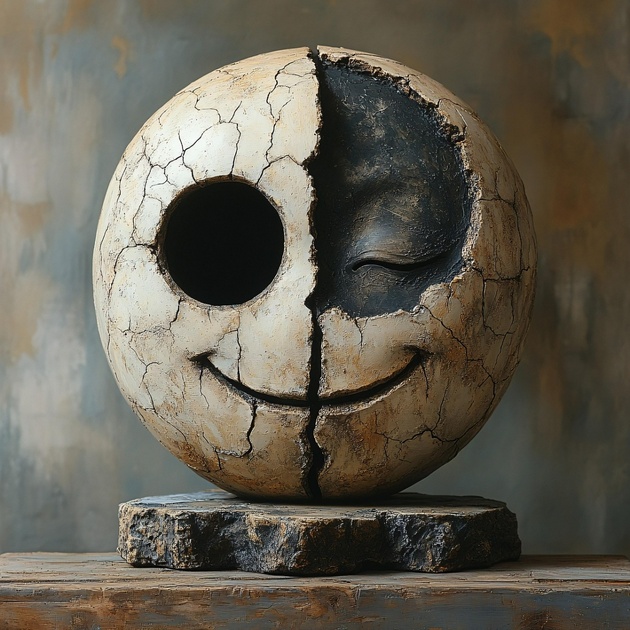
How Do We Live With Impurity – Parshat Naso
Impurity is a concept basically insignificant to 21st century Man. It has few halachic ramifications (aside from Niddah and Kohen) yet it occupies a significant amount of discussion in the Torah.
Without delving into the philosophical concept of impurity, I would like to share some thoughts on how we react to impurity. The Torah describes differing levels of ritual impurity, Tum’ah, which had significant ramifications while the Israelites were in the desert and during the time when the Beit Hamikdash is standing. In this parsha, three levels of Tum’ah are noted, when occurring in one of the following three situations – Tum’ah A: certain kinds of contact with a corpse; B: excreting certain reproductive bodily fluids; C: a leper.1 Each level is restricted to different parts of the Israelite camp. Rashi notes that Tum'ah A is restricted only from entering the area of the Mishkan, Tum'ah B is restricted from entering the area surrounding the Mishkan where the Levyim lived and Tum'ah C, which was the most restrictive, is restricted from entering the Israelite camp at all.
Tum'ah is not a sin. In fact, there are times when it is a mitzva to incur Tum'ah. Knowledge of a Mate Mitzva, a corpse that has no one to care for its burial, requires the finder to care for it even if it means they will have Tum'ah. “Because we are human, tumah is an inevitable part of our lives,” writes Rabbi Dov Linzer in an article beautifully titled “Holy Imperfection”.2 And God accepts our Tum'ah because we are human.
Our goal is not, however, to have Tum'ah. Our goal is to be ritually pure – Tahor. Or perhaps to be more exact - to be as Tahor as humans can possibly be. We will have Tum'ah again. It is part of the human experience. Do we choose to attain it? No. Can we accept its restrictions as an understanding of human limitations? That is our challenge. I would always like to say “yes, of course.” But alas, I too am only human and there are times when these limitations may disturb me and my 21st century sensitivities. That is my challenge. To live with my own personal limitations without allowing them to limit me in trying to attain my goals.
“I broke my neck. It didn’t break me.” Dr. Jerry Long
There was a young man, Jerry Long, who was an athlete. After an accident, he was left paralyzed from the neck down. He, too, had limitations. For months he was in rehab until he came to a realization about himself and his future. Dr. Viktor Frankl quotes him as saying, “I broke my neck. It didn’t break me.” He then continued to study and finish his doctorate.3
He refused to allow his limitations to limit his growth. He could no longer be an athlete but he could still grow and develop his other human capabilities.
Being in Tum'ah may feel unpleasant or, knowing the halachic restrictions, feel limiting. After acknowledging that feeling, there is so much that can still be done. We can continue to grow, learn, help others and find meaning even in our state of Tum'ah.
Image by Vilius Kukanauskas from Pixabay
Footnotes
- Bamidbar 5:2
- https://library.yctor ah.org/2016/05/holy-imperfection/
- near minutes 38-39 https://www.youtube.com/watch?v=yNNokZcKX0Y&list=PLHhFBC_qutip7B5dsYpAKg3CmCVCp5fdU&index=20&t=3039s There is also a much shorter clip: https://www.youtube.com/watch?v=Xx_s88bcJ_0&list=PLHhFBC_qutip7B5dsYpAKg3CmCVCp5fdU&index=1
Have A Great Shabbat!
For More Information On Logotherapy And How You Can Create A Fuller, More Meaningful Life, Or To Book An Online Session,
- Call Me At +972-54-589-3399, or in Israel 054-5893399
- Contact Me Thru my email at [email protected]