Yahoo!
Description
This class provides IAPST credits which are eligible for credits toward Certification as a Sex Therapist. See iapst.org/certification
See complete list of certificates available in the Accreditation tab
From Antiquity to Modernity: A History of Psychosexual Therapy examines how ideas about sex, sexuality, and treatment have been shaped over time by culture, philosophy, medicine, and morality. The course traces the field’s roots from ancient Greek and Roman theories of bodily balance and virtue, through the influence of Judaism, Christianity, and Islam in moralizing and regulating desire, and into the early modern and Victorian eras of reform, regulation, and scientific inquiry. Students will also engage with global perspectives, exploring non-Western understandings of sexuality that complicate and challenge Eurocentric models. By situating psychosexual therapy within its broader historical context, the course equips learners with a deeper appreciation of the cultural legacies that continue to shape contemporary approaches to sexual health and clinical practice.
To register or access the part 2 asynchronous/self study click -> HERE <-
Like this webinar? Click here to view packages that contain this webinar.
About the Presenter:
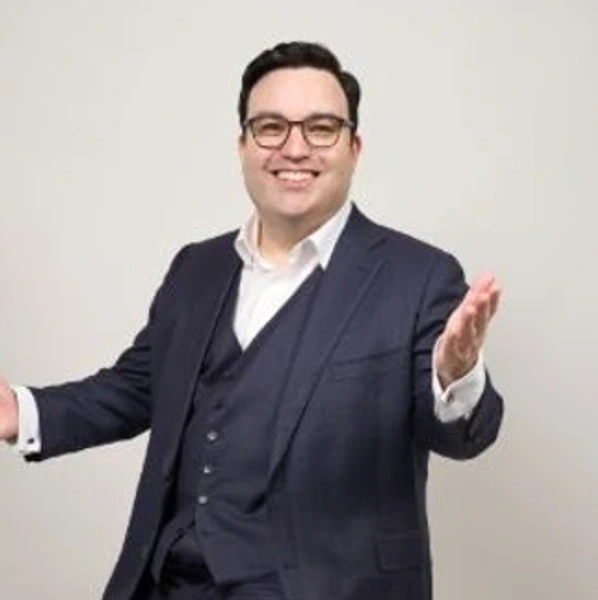
Caleb Jacobson is an internationally recognized clinical psychologist, sex therapist, and Bible scholar. He holds a Doctor of Psychology (PsyD) degree in clinical psychology and a Doctor of Philosophy (PhD) in Hebrew Bible, biblical archaeology, and psychological exegesis. In his clinical practice, Dr. Jacobson specializes in working with religious and conservative patients, treating male sexual dysfunction, and addressing rare and problematic sexual issues. A pioneer in the integration of sex therapy and religion, he is the author of the award-winning Sex Therapy with Religious Patients: Working with Jewish, Christian, and Muslim Communities (2024) and the editor of The Routledge International Handbook of Sex Therapy and Religion (2025). Dr. Jacobson currently serves as president of both the School of Sex Therapy and the International Association of Psychosexual Therapists, where he leads initiatives in education, research, and clinical advancement within the field.
Learning Objectives:
- Describe the historical foundations of psychosexual thought from ancient Greek and Roman theories to non-Western traditions and explain their influence on early ideas of sexual health.
- Summarize the contributions of early sexologists and psychoanalysts, including Ellis, Hirschfeld, Krafft-Ebing, and Freud, and evaluate their influence on psychosexual theory and practice.
- Explain the significance of mid-20th-century models such as Kinsey’s research, Masters and Johnson’s behavioral methods, and Kaplan’s triphasic model in shaping modern sex therapy.
Agenda:
Hour 1: Ancient and Religious Foundations
Lecture & Discussion (30 min):
Ancient Greek and Roman concepts of bodily balance, virtue, and humoral theories
Non-Western frameworks: Ayurvedic and Taoist understandings of sexuality
Interactive Activity (15 min):
Small-group exercise: Compare how different cultural traditions linked sexuality to health and morality
Debrief (15 min):
Whole-class discussion on similarities/differences across traditions
Hour 2: Religion, Early Modernity, and the Rise of Sexology
Lecture (25 min):
Influence of Judaism, Christianity, and Islam in moralizing and regulating desire
Early modern developments: Protestant reform, bourgeois norms, medical regulation (Onania)
Case Illustration (15 min):
Short primary text excerpts (e.g., Krafft-Ebing, Ellis, Hirschfeld)
Group Activity (20 min):
Students analyze how one early sexologist either pathologized or normalized sexual behavior
Hour 3: From Psychoanalysis to Contemporary Sex Therapy
Lecture (25 min):
Freud’s psychosexual theories, repression, transference, and case studies (e.g., Dora)
Mid-20th-century models: Kinsey’s research, Masters & Johnson’s behavioral protocols, Kaplan’s triphasic model
Later contributions: Money’s gender theories, Bancroft & Janssen’s Dual Control Model, Basson’s female response model
Interactive Discussion (20 min):
Feminist and LGBTQ+ critiques—How did they reshape psychosexual therapy?
Wrap-Up & Reflection (15 min):
Class discussion: Which historical frameworks continue to influence sex therapy today?
Instructor ties past models to present-day practice
Accreditation - This Webinar Offers 3 Continuing Education Credits
This webinar is recorded and will not grant live credits. It grants Credits as listed below.
- Therapist Express is recognized by the New York State Education Department's State Board for Mental Health Practitioners as an approved provider of continuing education for licensed creative arts therapists. #CAT-0122.
- Therapist Express is recognized by the New York State Education Department's State Board for Mental Health Practitioners as an approved provider of continuing education for licensed marriage and family therapists #MFT-0129.
- Therapist Express is recognized by the New York State Education Department's State Board for Mental Health Practitioners as an approved provider of continuing education for licensed mental health counselors. #MHC-0325.
- Therapist Express is recognized by the New York State Education Department's State Board for Psychology as an approved provider of continuing education for licensed psychologists #PSY-0275.
- Therapist Express is recognized by the New York State Education Department's State Board for Social Work as an approved provider of continuing education for licensed social workers #SW-0774.
- This program meets the requirements for the American Association of Sexuality Educators, Counselors and Therapists. These CE credits may be applied toward AASECT certification and renewal of certification. AASECT Core Knowledge Areas: . May be used for Sex Therapy Area .
- CE You! is an approved sponsor of the Maryland Board of Social Work Examiners for continuing education credits for licensed social workers in Maryland.
CE You! maintains responsibility for this program. - The School of Sex Therapy is an approved continued education provider for the International Association of Psychosexual Therapists. The School of Sex Therapy maintains responsibility for this program and its content.
This presentation is open to:
- Behavior Analysts
- Social Workers
- Professional Counselors
- Therapists
- Psychologists
- Licensed Mental Health Practitioners
- Medical Doctors and Other Health Professionals
- Other professionals interacting with populations engaged in mental health based services
This online class is offered at an intermediate level, and is beneficial for an intermediate level clinician:
- New practitioners who wish to gain enhanced insight surrounding the topic
- Experienced practitioners who seek to increase and expand fundamental knowledge surrounding the subject matter
- Advanced practitioners seeking to review concepts and reinforce practice skills and/or access additional consultation
- Managers seeking to broaden micro and/or macro perspectives
Additional information
- Refunds: Registrants who are unable to attend a Frum Therapist seminar or live webinars may ask for, and will receive, a credit or refund (your choice). Refund requests will be processed within 3 business days. When an attendee knows in advance that they are unable to attend we ask that they inform Frum Therapist ahead of time by emailing [email protected] or by calling or texting 631-202-1010 this allows us to free up the spot in the training in the event that a training is at or near capacity.
- Disability Access: If you require ADA accommodations, please contact our office 30 days or more before the event. We cannot ensure accommodations without adequate prior notification.
- Please Note: Licensing Boards change regulations often, and while we attempt to stay abreast of their most recent changes, if you have questions or concerns about this course meeting your specific board’s approval, we recommend you contact your board directly.
- The grievance policy for trainings provided by Frum Therapist is available here
- Satisfactory Completion: Certificates are available after satisfactory course completion in your account or by clicking here
- Participants will receive their certificate electronically upon completion of the webinar and course evaluation form.
- There is no conflict of interest or commercial support for this program.
- System Requirements: Any device (such as a computer, tablet, or phone), Dual-Core 2 GHz or higher processor, and at least 4 GB of RAM capable of running a Zoom session, along with a stable internet connection.
- Although early registration is recommended for this class in order to ensure the best experience, attendees may register and join until the start of the program