Yahoo!
Description
This class provides IAPST credits which are eligible for credits toward Certification as a Sex Therapist. See iapst.org/certification
See complete list of certificates available in the Accreditation tab
The Psychology of Sex focuses on the psychological dimensions of sexuality, integrated with social influences within a bio-psycho-social framework. It examines historical and contemporary psychological theories—including psychoanalytic, behavioral, cognitive, systems, feminist, narrative, and modern models like Incentive-Motivation and Human Affectome—and their clinical applications. Participants will explore critical components for sex therapy, such as cognitive scripts, cultural messaging, psychological barriers, intimacy skills, power dynamics, and neurodivergence. Independent study involves a confidential personal journal exploring the therapist’s own psychology of sex, with a reaction paper submitted to reflect on implications for therapeutic practice. Emphasizing ethical, inclusive approaches, the course equips learners to integrate psychological insights into sex therapy, complementing the broader training program’s bio-psycho-social perspective.
To register or access the part 2 asynchronous/self study click -> HERE <-
Like this webinar? Click here to view packages that contain this webinar.
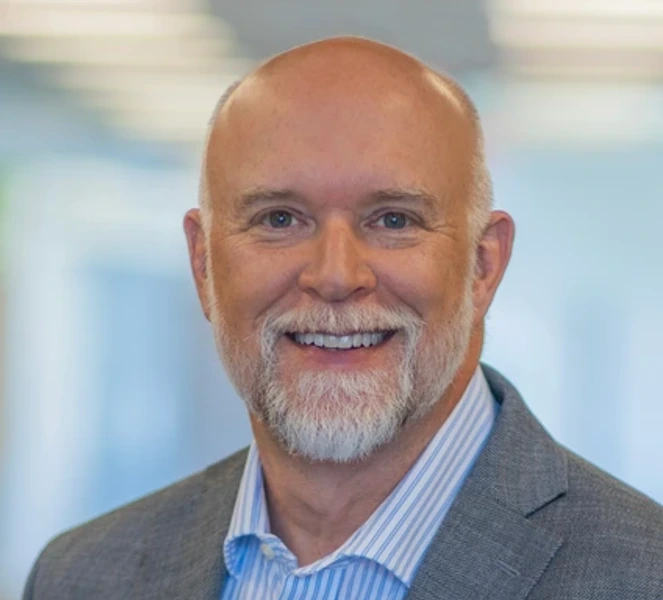
About the Presenter:
Learning Objectives:
- Participants will analyze the influence of historical and contemporary psychological theories (e.g., psychoanalytic, cognitive, Incentive-Motivation) on clinical sex therapy practices by discussing their applications to a case study.
- Participants will identify relevant psychological aspects of sexuality (e.g., cognitive scripts, intimacy dynamics) and their influence on sexual experiences and problems, illustrated by small group discussion of case studies.
- Participants will evaluate personal biases about sexuality and propose a way to maintain neutrality in therapy, as shown in a reflective reaction paper submitted after journaling during independent study.
Agenda:
Introduction – 10 minutes
Part 1 – 80 minutes
A. Is the “Psychology of Sex” a real distinction?
B. Past models from psychology and counseling
a. Psychoanalytic
b. Behavioral
c. Cognitive
d. Systems
e. Feminist
f. Narrative
C. Current and future models, including:
a. Incentive-Motivation Model
b. Tipping Point Model
c. Human Affectome Model
Break – 10 minutes
Part 2 – 80 minutes
D. Critical components for the sex therapist
a. Cognitive scripts
b. Perception (self and other)
c. Fantasy and imaging
d. Cultural messaging
e. Psychological barriers (trauma, anxiety, psychopathology, etc.)
f. Intimacy skills (attachment, trust, self-differentiation, communication, etc.)
g. Power dynamics
h. Neurodivergence
Accreditation - This Webinar Offers 3 Continuing Education Credits
This webinar is recorded and will not grant live credits. It grants Credits as listed below.
- Therapist Express is recognized by the New York State Education Department's State Board for Mental Health Practitioners as an approved provider of continuing education for licensed creative arts therapists. #CAT-0122.
- Therapist Express is recognized by the New York State Education Department's State Board for Mental Health Practitioners as an approved provider of continuing education for licensed marriage and family therapists #MFT-0129.
- Therapist Express is recognized by the New York State Education Department's State Board for Mental Health Practitioners as an approved provider of continuing education for licensed mental health counselors. #MHC-0325.
- Therapist Express is recognized by the New York State Education Department's State Board for Psychology as an approved provider of continuing education for licensed psychologists #PSY-0275.
- Therapist Express is recognized by the New York State Education Department's State Board for Social Work as an approved provider of continuing education for licensed social workers #SW-0774.
- This program meets the requirements for the American Association of Sexuality Educators, Counselors and Therapists. These CE credits may be applied toward AASECT certification and renewal of certification. AASECT Core Knowledge Areas: . May be used for Sex Therapy Area .
- CE You! is an approved sponsor of the Maryland Board of Social Work Examiners for continuing education credits for licensed social workers in Maryland.
CE You! maintains responsibility for this program. - The School of Sex Therapy is an approved continued education provider for the International Association of Psychosexual Therapists. The School of Sex Therapy maintains responsibility for this program and its content.
This presentation is open to:
- Behavior Analysts
- Social Workers
- Professional Counselors
- Therapists
- Psychologists
- Licensed Mental Health Practitioners
- Medical Doctors and Other Health Professionals
- Other professionals interacting with populations engaged in mental health based services
This online class is offered at an introductory level, and is beneficial for a beginner level clinician:
- New practitioners who wish to gain enhanced insight surrounding the topic
- Experienced practitioners who seek to increase and expand fundamental knowledge surrounding the subject matter
- Advanced practitioners seeking to review concepts and reinforce practice skills and/or access additional consultation
- Managers seeking to broaden micro and/or macro perspectives
Additional information
- Refunds: Registrants who are unable to attend a Frum Therapist seminar or live webinars may ask for, and will receive, a credit or refund (your choice). Refund requests will be processed within 3 business days. When an attendee knows in advance that they are unable to attend we ask that they inform Frum Therapist ahead of time by emailing [email protected] or by calling or texting 631-202-1010 this allows us to free up the spot in the training in the event that a training is at or near capacity.
- Disability Access: If you require ADA accommodations, please contact our office 30 days or more before the event. We cannot ensure accommodations without adequate prior notification.
- Please Note: Licensing Boards change regulations often, and while we attempt to stay abreast of their most recent changes, if you have questions or concerns about this course meeting your specific board’s approval, we recommend you contact your board directly.
- The grievance policy for trainings provided by Frum Therapist is available here
- Satisfactory Completion: Certificates are available after satisfactory course completion in your account or by clicking here
- Participants will receive their certificate electronically upon completion of the webinar and course evaluation form.
- There is no conflict of interest or commercial support for this program.
- System Requirements: Any device (such as a computer, tablet, or phone), Dual-Core 2 GHz or higher processor, and at least 4 GB of RAM capable of running a Zoom session, along with a stable internet connection.
- Although early registration is recommended for this class in order to ensure the best experience, attendees may register and join until the start of the program