Yahoo!
Description
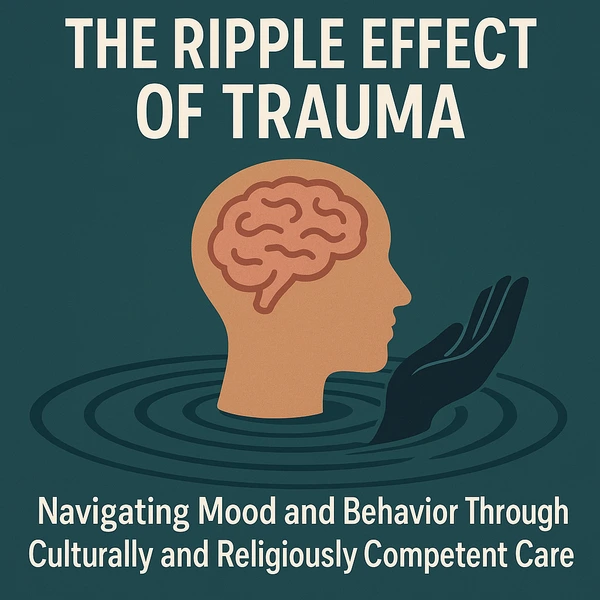
In this presentation, we will cover the basics of addiction and examine the critical role of addressing trauma (PTSD) as the root cause of addiction through the lens of experiential and somatic therapy. Traditional addiction treatments often fail to tackle the underlying trauma that fuels disordered behaviors related to eating, finances, relationships, substances, and sex. Somatic therapies focus on the interplay between body and mind, employing techniques like body awareness and movement to address trauma stored in the body.
We will explore how somatic therapies such as mindfulness, brainspotting (BSP), and EMDR can be integrated with 12-step programs and task models, enhancing trauma processing and recovery. Additionally, we will emphasize the importance of culturally and religiously competent care with faith-based populations. By considering religious values, communal expectations, and culturally specific trauma responses, practitioners can foster trust and improve treatment outcomes.
Attendees will gain a deep understanding of how these therapies work, their benefits, and practical strategies for incorporating them into addiction treatment frameworks while respecting and integrating clients’ cultural and religious identities.
About the Presenter:
Learning Objectives:
- Recognize and explain to clients the fundamental link between trauma and addiction, and how addressing trauma is essential for effective addiction recovery.
- Utilize the Adverse Childhood Experience (ACE) test to assess potential trauma and subsequent disordered behaviors.
- Explain the importance of respecting religious values and understanding culturally specific trauma responses in enhance treatment outcomes
Agenda:
Introduction- 15 mins
Presentation-90 mins
Q&A- 15 mins
This presentation is open to:
- Behavior Analysts
- Social Workers
- Professional Counselors
- Therapists
- Psychologists
- Licensed Mental Health Practitioners
- Medical Doctors and Other Health Professionals
- Other professionals interacting with populations engaged in mental health based services
This online class is offered at an intermediate level, and is beneficial for an intermediate level clinician:
- New practitioners who wish to gain enhanced insight surrounding the topic
- Experienced practitioners who seek to increase and expand fundamental knowledge surrounding the subject matter
- Advanced practitioners seeking to review concepts and reinforce practice skills and/or access additional consultation
- Managers seeking to broaden micro and/or macro perspectives
Additional information
- Refunds: Registrants who are unable to attend a Frum Therapist seminar or live webinars may ask for, and will receive, a credit or refund (your choice). Refund requests will be processed within 3 business days. When an attendee knows in advance that they are unable to attend we ask that they inform Frum Therapist ahead of time by emailing [email protected] or by calling or texting 631-202-1010 this allows us to free up the spot in the training in the event that a training is at or near capacity.
- Disability Access: If you require ADA accommodations, please contact our office 30 days or more before the event. We cannot ensure accommodations without adequate prior notification.
- Please Note: Licensing Boards change regulations often, and while we attempt to stay abreast of their most recent changes, if you have questions or concerns about this course meeting your specific board’s approval, we recommend you contact your board directly.
- The grievance policy for trainings provided by Frum Therapist is available here
- Satisfactory Completion: Certificates are available after satisfactory course completion in your account or by clicking here
- Participants will receive their certificate electronically upon completion of the webinar and course evaluation form.
- There is no conflict of interest or commercial support for this program.
- System Requirements: Any device (such as a computer, tablet, or phone), Dual-Core 2 GHz or higher processor, and at least 4 GB of RAM capable of running a Zoom session, along with a stable internet connection.
- Although early registration is recommended for this class in order to ensure the best experience, attendees may register and join until the start of the program